
Investors
Looking for a stable, low risk, investment? Diversify your personal portfolio with fractions of real estate in the high-demand housing market.


The Opportunity: A New Class of Real Estate Investment
Real estate remains one of the most stable investments in Canada, but high entry costs and property management barriers limit access. BuyAssist is a Fintech platform that bridges the gap between capital and motivated first-time buyers.
We allow investors—whether private individuals, funds, institutions, or banks—to purchase partial ownership in residential properties. You provide the capital; the homeowner provides the care.
How Your Investment Grows
Unlike traditional lending or rental properties, BuyAssist offers a hybrid return model:
-
- Capital Appreciation: You typically hold a 50% ownership stake (adjustable based on agreement). As the home appreciates in value over time, your equity grows. When the home is sold, you split the proceeds based on your ownership percentage.
- Monthly Cash Flow: If you choose to hold the mortgage portion of the financing, the buyer pays you monthly at fair market rates.
- Secured Asset: Your investment is not speculative paper; it is secured by actual real estate property.

Who Can Invest?
-
- Investment Funds & Institutions: Deploy capital into a secure, high-demand housing market.
- Banks: Offer alternative mortgage products to high-potential clients who don’t fit the traditional 4x gross salary box.
- Private Individuals: Diversify your personal portfolio with fractions of real estate.

Risk Mitigation & Protection
We understand that markets fluctuate. BuyAssist structures agreements to prioritize capital preservation for the investor:
-
- Downside Protection: If the property is sold for less than the original purchase price, the agreement can be structured so you receive your original investment back plus an interest factor before the owner receives their share.
- Exit Strategy: When the owner wants to move or sell, you have the first right of refusal on offers.
- Buyout Options: As the homeowner builds equity, they may refinance to buy you out. This buyout is calculated based on your original investment plus compounding interest tied to inflation and real estate prices.
- Downside Protection: If the property is sold for less than the original purchase price, the agreement can be structured so you receive your original investment back plus an interest factor before the owner receives their share.
The BuyAssist Advantage
-
- Zero Tenant Hassle: The co-owner is not a tenant; they are a homeowner. They live in the property and take pride in ownership, reducing the “wear and tear” risks associated with rentals.
- Diverse Portfolio: Expand your reach beyond housing. The BuyAssist model is designed to eventually support other appreciating assets, such as antiques and artwork.
- Clear Revenue Model: We operate on transparent transaction or finder’s fees.
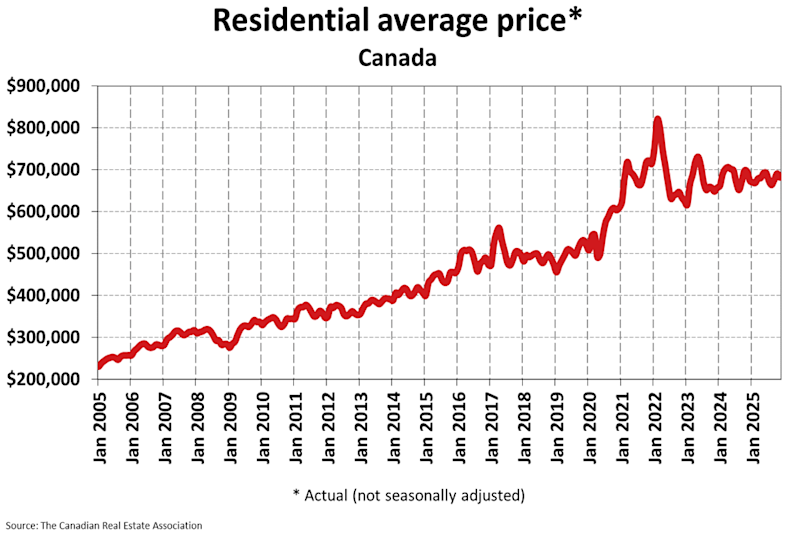
National and Regional Gains (Past Decade)
Over the past 10 years, the Canadian housing market has experienced substantial price gains, with national average prices roughly doubling in a decade.
Canada (National Average): The national average resale price in 2022 was $703,875, compared to $363,779 in 2012, representing an increase of nearly 93% over the decade. Global Property Guide data suggests a nominal 10-year price change of over 76% for Canada as a whole (data current to early 2026).
Ontario: Many areas within Ontario experienced significant appreciation, with 24 out of 28 areas seeing increases of 100% or more in the decade leading up to March 2024.
Major Cities: A Teranet-National Bank index reported that residential real estate prices in 11 leading Canadian cities had an average gain of 69% over a 10-year span (prior to June 2018).
Building new homes in Canada has become drastically more expensive over the past decade, with construction costs skyrocketing due to pandemic-driven material price surges (lumber, steel, concrete), labor shortages, and increased development fees, leading to near-doubled or even tripled costs in some areas from 2014 to 2024, far outpacing general inflation, although some cost stabilization began in 2024-2025. * Statistics Canada
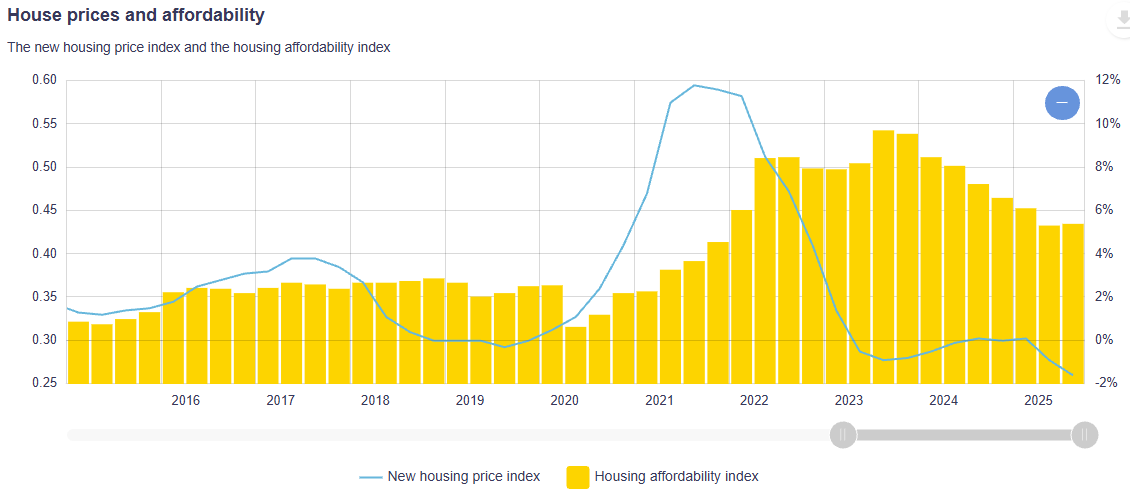
Housing Affordability (Past Decade)
The Canadian housing market has experienced substantial manufacturing cost variations linked to the Covid pandemnic, followed by national affordability crisis in less than a decade.
New housing price index : The New Housing Price Index is a monthly series that measures changes over time in the contractors’ selling prices of new residential houses, where detailed specifications pertaining to each house remain the same between two consecutive periods. Learn more
Housing affordability index : The housing affordability index is meant to measure the share of disposable income that a representative household would put toward housing-related expenses. The measure is a ratio of housing-related costs (mortgage payments and utility fees) to average household disposable income. The higher the ratio, the more difficult it is to afford a home.

BuyAssist your next home!
BuyAssist, available on Android, iOS, and Web. Make housing affordable again.